Introduction to Our Catalog of Nature Writing
 In recent years,
partly because of a tendency in market-based economies to niche all
information, but also in response to a relatively sudden awareness of
the social and political impact environmental legislation and thought
have had on American society, people have come to speak of nature
writing as a distinct, even emergent genre. It is more accurate, most
critics assert, to say we are witnessing a resurgence in the genre;
and, setting it alongside other genres, it is arguably more helpful to
see it as that strain of American literature that, more than others
now, is pursuing the ancient discourse on human fate.
In recent years,
partly because of a tendency in market-based economies to niche all
information, but also in response to a relatively sudden awareness of
the social and political impact environmental legislation and thought
have had on American society, people have come to speak of nature
writing as a distinct, even emergent genre. It is more accurate, most
critics assert, to say we are witnessing a resurgence in the genre;
and, setting it alongside other genres, it is arguably more helpful to
see it as that strain of American literature that, more than others
now, is pursuing the ancient discourse on human fate.
The latter statement may frost a few sensibilities, but nature writing -- or environmental literature or the literature of place or landscape writing -- is a categorical term. Its utility and its distinct boundaries are both evolving, and so subject to the passage of time, a phenomenon cogently addressed in the nature writing of Charles Darwin.
One thing clearly going on in the current re-evaluation of this term is consolidation. Literary writing from several different quarters -- social criticism, science, travel -- is being pooled, treated as if it had certain philosophical themes in common, among them the notions of "extinction" and "restoration." Much of this work, I think, is being generated by a broad concern over the stranglehold materialism and consumerism have on American life, and alarm over the commodification of landscapes, the latter a marketing effort that frequently employs the language and attitudes of nineteenth-century slavers.
Among the salient and generally agreed upon characteristics of this kind of writing today are: 1) an assumption that "landscape" -- every element and nuance of the physical world, from a snowstorm passing through, to line and shadow in a woody draw, to the whinny of a horse -- is integral, not incidental to the story; 2) a thematic focus on the relationship of human culture to place or, more generally, of culture to nature; and 3) a heightened sensitivity to issues of justice and spirituality.
Work of this sort has
set American literature apart since at least the middle of the
nineteenth century, or earlier if one counts the exploration
narratives of people like William Bartram or the agrarian writing of
people like Thomas Jefferson. In Moby-Dick, Melville unfolds
his moral drama on a seascape indispensable to his story. Later, on a
much smaller scale, Stephen Crane does the same in a seminal American
 short story, "The Open Boat." In Cather and Steinbeck, and more
recently in Peter Matthiessen, Gary Snyder and Wendell Berry, we find
the same pursuit of a just relationship with the divine in a
particularized landscape and, again, themes of social justice. The
approach also often assumes that the physical landscape is not
ownable, that it may be numinous, and that these landscapes and all
they include, from weather to color to basalt boulders, exist in the
same moral universe with the human.
short story, "The Open Boat." In Cather and Steinbeck, and more
recently in Peter Matthiessen, Gary Snyder and Wendell Berry, we find
the same pursuit of a just relationship with the divine in a
particularized landscape and, again, themes of social justice. The
approach also often assumes that the physical landscape is not
ownable, that it may be numinous, and that these landscapes and all
they include, from weather to color to basalt boulders, exist in the
same moral universe with the human.
It is difficult to refine a definition of nature writing, even for purposes of general orientation, without excluding certain material that seems in close keeping with its traditions. The delineation of physical place, for example, is integral to the novels of Cormac McCarthy and to Charles Frazier's Cold Mountain, as interwoven here as it is in Faulkner; but McCarthy and Frazier are rarely thought of as nature writers. Too, while the themes I have posited form part of the sine qua non of much Native American writing, Simon Ortiz's poems, say, or Linda Hogan's essays, or Louise Erdrich's novels are rarely included within the working purview of the definition. (Leslie Silko comes to mind here, too, but not solely for the importance of landscape in her fiction and nonfiction. She believes with Ortiz and others, including some non-Native nature writers, that writing is a moral act. Telling the story imposes moral obligations on the writer, both to the material and to the reader or listener. Taking the reader into account like this, letting the story occur in the space between writer and reader, is of a piece with Peter Brook's experiments, of course, with audience in the theatre, and also at odds with the contemporary idea of the novelist as the reader's authority, rather than his or her companion.)
The philosophical
roots of this work, obviously, lie with Thoreau and Emerson, and the
genre includes elements of misanthropy (often, in my view,
exaggerated) in people like Edward Abbey, Robinson Jeffers, and Loren
Eiseley. But, again, it is hazardous to try to maintain strict bounds.
Certain writers frequently cited as nature writers bring with them an
additional emphasis -- Wallace Stegner's citizenship, say, or Gary
Nabhan's ethnobotany. John Muir, though central to any definition of
nature writing, is also considered a focal political figure; Aldo
Leopold, another pivotal figure, is not literary enough for some,
 while Thomas Merton is often regarded as peripheral because his
writing is too "spiritual." (I would argue that Merton, more than any
other contemporary prose writer, maintained the tradition of
spirituality in American writing now thought to be integral to nature
writing.) And, in any given critical article, we may learn that, say,
Mary Austin, author of The Land of Little Rain (1903), like
Susan Fenimore Cooper, author of Rural Hours (1850), has just
been "rediscovered" as a nature writer.
while Thomas Merton is often regarded as peripheral because his
writing is too "spiritual." (I would argue that Merton, more than any
other contemporary prose writer, maintained the tradition of
spirituality in American writing now thought to be integral to nature
writing.) And, in any given critical article, we may learn that, say,
Mary Austin, author of The Land of Little Rain (1903), like
Susan Fenimore Cooper, author of Rural Hours (1850), has just
been "rediscovered" as a nature writer.
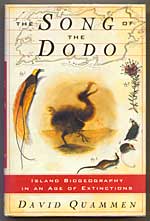
To my mind, a number of contemporary "travel" writers and "science" writers, David Quammen eminent among them, have published work that could easily be subsumed within a good working definition. And, in addition to Jeffers and Snyder, Mary Oliver, W.S. Merwin, Frost, and Robert Hass have composed poems I find essential to an understanding of the genre, though poetry itself, like fiction, plays a minor role in most critical definitions.
Finally, like all good writers whose work might be adduced here, many can be situated legitimately in several genres at once. What this says, among other things, is that nature writing, again, has recently become a way to draw together otherwise disparate writers and writing -- Merton's essays in opposition to nuclear weapons, Scott Momaday's The Way to Rainy Mountain, and the poetry of Pattiann Rogers -- because of their complementary approaches to a modern philosophical issue. In this example, the writers can be said to share similar attitudes toward the sanctity of life.
 A key figure in
defining this kind of work, I believe, particularly as it is discussed
today, is Rachel Carson, a graceful writer with a social conscience
who brought a distinguished measure of personal authority to her work.
That combination is strikingly apparent in Wendell Berry's essays,
where the emphasis is often on agrarian economics and the importance
of local scale; in Matthiessen, whose intent is more clearly literary
and whose sensibility is as much sociological as biological; and in
E.O. Wilson, where the emphasis may be on biology, but where the value
of real experience, in an age of computer-driven abstraction, is
always in the foreground.
A key figure in
defining this kind of work, I believe, particularly as it is discussed
today, is Rachel Carson, a graceful writer with a social conscience
who brought a distinguished measure of personal authority to her work.
That combination is strikingly apparent in Wendell Berry's essays,
where the emphasis is often on agrarian economics and the importance
of local scale; in Matthiessen, whose intent is more clearly literary
and whose sensibility is as much sociological as biological; and in
E.O. Wilson, where the emphasis may be on biology, but where the value
of real experience, in an age of computer-driven abstraction, is
always in the foreground.
Carson made government
and industry defensive, and both actively tried to discredit her. The
denouncement of injustice in government and business expressed in the
work of many nature writers -- Rick Bass, Terry Tempest Williams,
Richard Nelson, William deBuys -- echoes Carson. Their social
criticism, like Carson's, derives its authority from an active long-
term involvement with specific landscapes. Where such modern writers
differ from Carson (and expand upon Wilson's insistence on ground
truthing) is the extent to which they bring non-Western thinking into
their work, particularly native American thought. As a consequence,
some of the most intellectually engaging essays of any sort being
 written today are nature essays that elucidate by evoking both Western
analysis and non-Western awe to convey meaning. (To use a literary
term, these writers intentionally put metaphor on a par with reason as
a path to truth.)
written today are nature essays that elucidate by evoking both Western
analysis and non-Western awe to convey meaning. (To use a literary
term, these writers intentionally put metaphor on a par with reason as
a path to truth.)
Other attributes further characterize the work of many nature writers. One is the insistence on real locales -- the Florida of Matthiessen's Watson trilogy, say -- and on the "thoroughly researched local" as a foundation for positing universals. For this reason, while many nature writers are sometimes identified with regions -- Jan DeBlieu with the Outer Banks, David Kline with Ohio, Janisse Ray with rural Georgia, Gretchen Legler with Alaska -- it is their very rigor with local knowledge that makes the stories they tell relevant in other regions.
Another attribute of this group is that many of them write passionately on public land issues. As poets and novelists they are, not incidentally, also accomplished essayists.
In an effort to define
the genre deductively, it is sometimes lost that a definition might as
easily be had inductively, as when writers broadly regarded as nature
writers list books they resonated with early on. In addition to the
titles and authors I've already mentioned, a dozen or so come quickly
to mind for me.* One of them is John Haines's Winter News
 (1966), his first collection of poetry. At the time I read the book,
I'd not traveled at all in the Arctic; but I dreamed of being able to
and these poems spoke powerfully to that dream. They infused it with
concrete detail. In one poem, "The House of the Injured," a man comes
upon a wounded and frantic bird dying in an abandoned cabin. "I sank
to my knees --/," wrote Haines, "a man shown the face of God." This
from a subsistence hunter devoid of sentimentality, an artist and
sculptor who'd come to Alaska in 1947 to homestead, and who wrote this
handful of iron hard, concise, absolutely accurate (I intuited then,
and would later verify) poems about life in this far-off landscape. In
just a few lines, the poems created volumes of space and increments of
time different from the ones I knew, and for which I yearned. His form
of address to animals was direct, his evocation of them grounded in
experience, not philosophy. I learned in his poems how to write of
things so beautiful they made you afraid.
(1966), his first collection of poetry. At the time I read the book,
I'd not traveled at all in the Arctic; but I dreamed of being able to
and these poems spoke powerfully to that dream. They infused it with
concrete detail. In one poem, "The House of the Injured," a man comes
upon a wounded and frantic bird dying in an abandoned cabin. "I sank
to my knees --/," wrote Haines, "a man shown the face of God." This
from a subsistence hunter devoid of sentimentality, an artist and
sculptor who'd come to Alaska in 1947 to homestead, and who wrote this
handful of iron hard, concise, absolutely accurate (I intuited then,
and would later verify) poems about life in this far-off landscape. In
just a few lines, the poems created volumes of space and increments of
time different from the ones I knew, and for which I yearned. His form
of address to animals was direct, his evocation of them grounded in
experience, not philosophy. I learned in his poems how to write of
things so beautiful they made you afraid.
By the early sixties,
it had become common within literary and art circles to invoke quantum
mechanics as an explanatory metaphor, both to make sense of people
like Joyce and Pollock and to meld disparate creations in literature
and the arts into movements like Dada or existentialism. Chaos theory
now augments quantum mechanics; but ecology, I believe, might emerge
as the most telling way to explain art and thought from the late
twentieth century. The term is too debated, too politicized to be
useful now; but the science of ecology is the study of coherence in
communities, and this subject -- the disintegration of communities and
the question of how they are to be rehabilitated -- is, in my view,
the critical issue in nature writing today.
 One can also argue
that nature writing is the least equivocal strain of American
literature when it comes to denouncing the status quo, in particular
the destructive nature of large-scale capitalistic enterprise, the
collusion of government and big business, and the general erosion of
democratic principles in the United States. It should be no surprise
that Thoreau wrote both Walden and On the Duty of Civil
Disobedience. It may even be, as the scholar and critic Daniel
Peck has argued, that Thoreau was prescient about the social damage
capitalism would wreak. Thoreau intuited, suggests Peck, the need for
a new foundation mythology, one that would link human activity to an
actual place, if American civilization was going to survive the
dehumanization and despiritualization -- the barbarism -- of the Age
of Empire. That mythology is working itself to the fore, I would
argue, in the essays, novels and poems now being assembled by
different reviewers under the rubric of nature writing.
One can also argue
that nature writing is the least equivocal strain of American
literature when it comes to denouncing the status quo, in particular
the destructive nature of large-scale capitalistic enterprise, the
collusion of government and big business, and the general erosion of
democratic principles in the United States. It should be no surprise
that Thoreau wrote both Walden and On the Duty of Civil
Disobedience. It may even be, as the scholar and critic Daniel
Peck has argued, that Thoreau was prescient about the social damage
capitalism would wreak. Thoreau intuited, suggests Peck, the need for
a new foundation mythology, one that would link human activity to an
actual place, if American civilization was going to survive the
dehumanization and despiritualization -- the barbarism -- of the Age
of Empire. That mythology is working itself to the fore, I would
argue, in the essays, novels and poems now being assembled by
different reviewers under the rubric of nature writing.
A literary category, of course, is not nearly as important as the questions the category may pose in its time. It is not as important as the respect its practitioners show for language, or the concern they may express for the fate of society. In the coming decade it is likely that the definition of nature writing will shift so as to seem more mainstream; and that it will be seen as work as illuminating of American life, American politics and American social organization as were novels and essays inspired by the Industrial Revolution and its aftermath, by Freudian psychology, and by European history and culture in their time. However it is judged, like any worthy literature it should continue to undermine complacency, resist definition, and induce hope.
* John C. Van Dyke's The Desert (1901); Theodora Krober's Ishi in Two Worlds (1961); Frank Waters' The Man Who Killed the Deer (1942); Gene Weltfish's The Lost Universe (1965); Henry Beston's The Outermost House (1928); William Eastlake's novella Portrait of the Artist with Twenty-Six Horses (1958); John Fowles' essay "The Tree" (1979) and John Berger's essay "Why Look at Animals?" (1977); Kobo Abe's The Woman in the Dunes (1964); Robert Byron's The Road to Oxiana (1937); Faulkner's The Bear (1942); and John Baker's memoir and homage, The Peregrine (1967). I found a sense of what I wanted to be up to, too, in Thomas Hardy, Gerard Manley Hopkins, Emily Dickinson, and although this is a reiteration, in Crane, Cather and Steinbeck, and then in Carson and Matthiessen. And through it all, the linchpin for me was Moby-Dick.
Copyright © 2000 by Barry Lopez